
Experiential learning
Students Probe Gender and Peacebuilding Concerns
NYU SPS CGA Aids Global Network of Women Peacebuilders in Assessment of Gender-specific Provisions in Post-Conflict Regions
Practicum Partner: Global Network of Women Peacebuilders
<p><span class="p-body">The Global Network of Women Peacebuilders (GNWP) is a coalition of more than 100 organizations committed to enabling “the creation of equal, resilient and peaceful communities.” GNWP partners with governments, youth organizations, and the United Nations to advance women’s rights and gender equality.</span></p>
<p><span class="p-body">Over the years, students at the Center for Global Affairs (CGA) at NYU SPS have worked closely with GNWP to consult on key research initiatives through an exciting, credit-bearing opportunity called a consulting practicum. </span></p>
<p><span class="p-body">During these practicums, GNWP experts have helped students shape research methodology and provided invaluable insights on the gender dimensions of peacebuilding. In turn, students have contributed to a number of important deliverables including with GNWP partners, including:</span></p>
<ul class="p-list">
<li><p><span class="p-body">The research report <a href="https://gnwp.org/wp-content/uploads/GNWP-NYU_ResearchReport2020-final-web.pdf" target="_blank">Gender-Sensitive Provisions in Peace Agreements and Women’s Political and Economic Inclusion Post-Conflict</a>, which was picked up by the Council on Foreign Relations.</span></p>
</li>
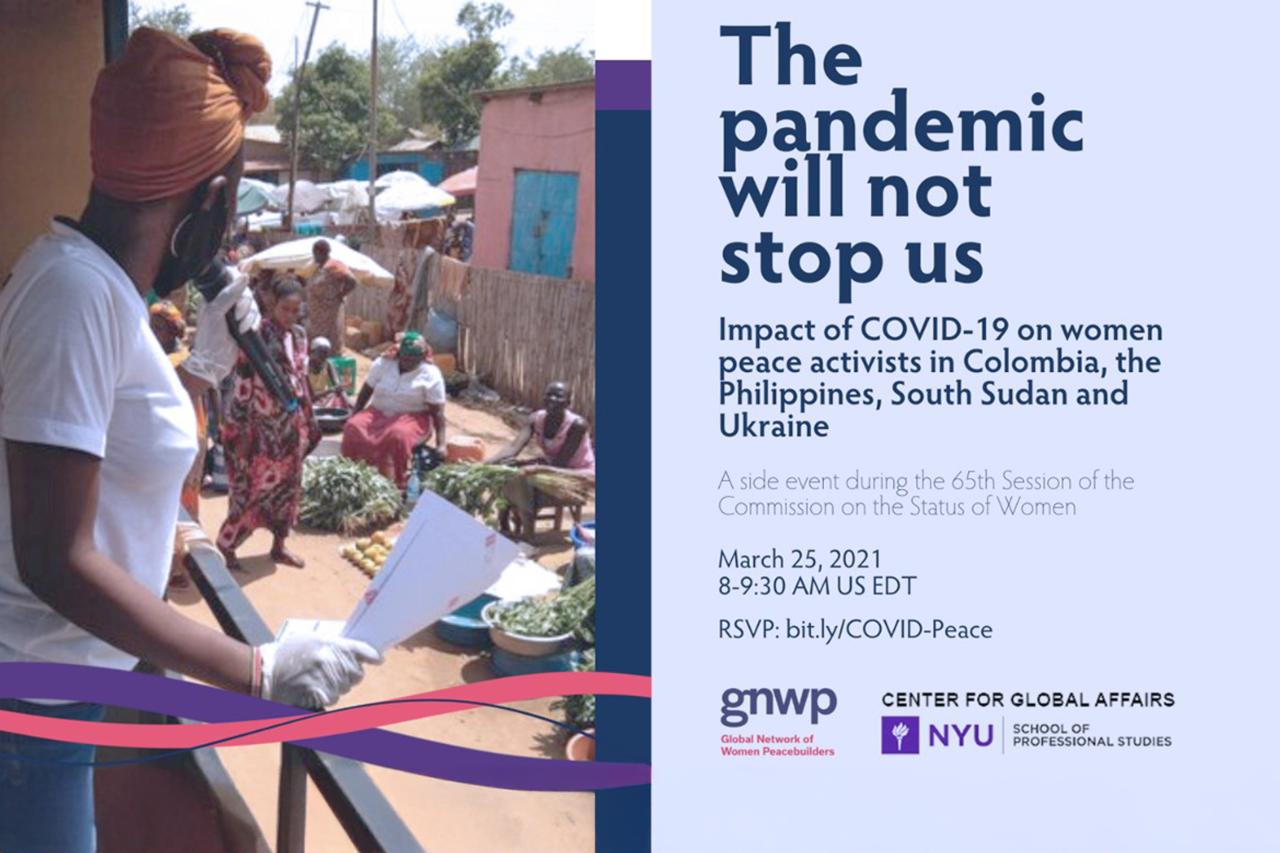
<li><p><span class="p-body">A report on the<a href="https://gnwp.org/nyu-research-2021/" target="_blank"> impact of COVID-19 on women’s peace work</a>, which was converted to an academic paper submitted to the Journal of Social Politics and was also presented at international meetings, including the 2021 UN Commission on the Status of Women. Additionally, GNWP used the report’s findings to advocate for funding for women’s peace work in fragile states. </span></p>
</li>
</ul>
<p><span class="p-body">A study of <a href="https://gnwp.org/research-report-perspectives-on-youth-engagement-in-operationalizing-peace-and-security-at-a-national-level/" target="_blank">how young people, particularly young women, engage with national peacebuilding planning</a> in Tunisia, Jordan, Iraq, the Philippines, the Democratic Republic of Congo, and Nigeria. The study attracted interest from United Nations staff involved in advancing the global youth, peace, and security agenda.</span></p>
About NYU SPS Practicums
<p><span class="p-body">Global consulting practicums are a signature part of the learning experience at <a href="/content/sps-nyu/about/academic-divisions-and-departments/center-for-global-affairs.html">NYU SPS’ Center for Global Affairs</a>. Collaborating with top organizations such as the United Nations, the US State Department, non-governmental organizations, and private firms, NYU SPS CGA offers practical, hands-on learning experiences in international policymaking through its global consulting practicums.</span></p>
<p><span class="p-body">Under faculty supervision, the full-credit-bearing practicums have become a key element in the program’s commitment to bridging classroom learning with practical applications.</span></p>
The NYU SPS Learning Experience
<p><span class="p-body">Every NYU SPS degree student can build a portfolio of work through hands-on learning experiences such as Real World projects, global field intensives, consulting practicums, internships, and capstone projects.</span></p>
<p><span class="p-body">To learn more about our hands-on learning experiences, please visit <a href="/content/sps-nyu/experience/how-youll-learn.html" target="_blank">How You’ll Learn</a> for more information.</span></p>